Asphalt Paving in Miami, FL
New asphalt surfaces, resurfacing over sound ground, and full-depth rebuilds across Miami and Miami-Dade County -- graded for water first, then based, paved and compacted.
Call (786) 755-3653 for a Free Estimate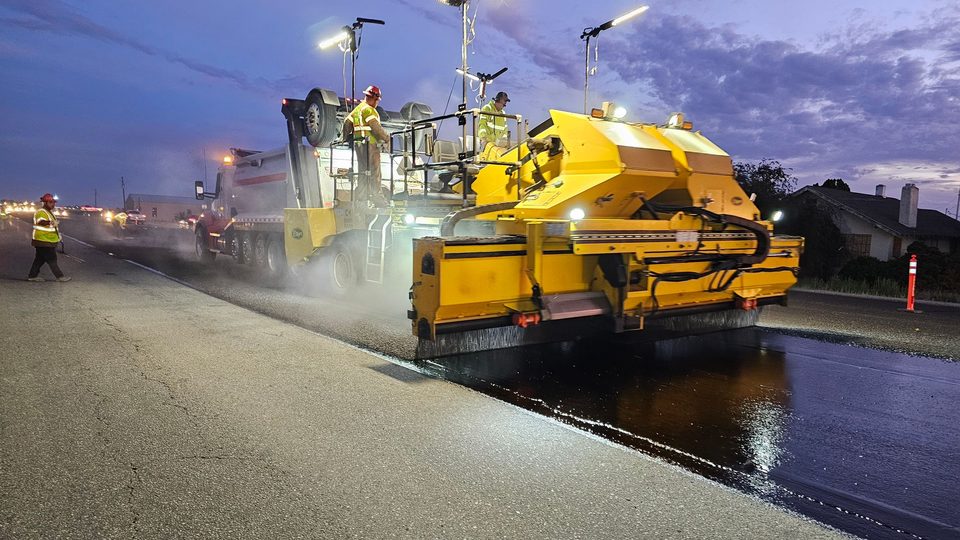
Paving is the broad trade: putting a durable surface on ground that either has never carried one or is carrying one that has stopped working. Driveways are the most common version of it here, but the same work covers private drives, apartment and condominium access roads, small lots, and the connecting surfaces around a building that nobody thinks about until they fail.
What all of it has in common in South Florida is that the visible part -- the black surface -- is the least important part. Grading decides where water goes. The base decides whether the surface is supported. Compaction decides whether either of those holds. Asphalt is the last layer, it goes down in a few hours, and by the time it arrives on site the outcome of the job has already been determined.
Grading Comes Before Everything
The first decision on any paving job in Miami-Dade is where the water is going to go, and it is made with a machine and a laser rather than with asphalt. Much of the county is flat, which means fall has to be built into a surface rather than found in the landscape. A crown down the centre, a consistent slope to one side, or a fall toward a drain -- one of those has to exist, or the surface will hold water and water is what destroys asphalt here.
Grading also has to account for where the water goes once it leaves the surface. Moving a puddle from the middle of a driveway to the foot of a garage door has not solved anything. On sites where the natural low point is the building, the grading plan and the drainage plan are the same plan, and they get made together before the ground is touched.
This is the stage that gets compressed when a job is priced too low. Grading is time on a machine and it does not show up in the finished surface in any way a homeowner can see, which makes it the easiest thing to shorten and the most expensive thing to have shortened.
Base Depth Is Matched to the Load, Not Guessed
A passenger-car driveway, a condominium access road that sees delivery trucks, and a small commercial yard carrying loaded vehicles are three different structures even though all three end in a black surface. The difference between them is almost entirely in the base: how deep it is, what it is built from, and how thoroughly it is compacted in lifts.
In South Florida that base is typically lime rock over a prepared subgrade. Published practice puts four to eight inches of base under a surface where the subgrade is weak, and a good deal of Miami-Dade subgrade qualifies -- loose sand, uncontrolled fill from older construction, or ground that simply sits wet because the water table is close.
Anyone quoting an identical build for every job on every site is not measuring the thing that decides how long the surface lasts. The right question for a contractor is not how thick the asphalt will be. It is what they found when they looked at the ground, and what depth of base that finding produced.
Placing and Compacting in Miami Conditions
Hot-mix asphalt has to be placed and compacted while it is still hot enough to work. In cold-climate states that is the constraint that creates a paving season, because once the mat cools too quickly the rollers cannot achieve density and the surface is compromised before anyone drives on it. South Florida has the opposite problem and it is a much easier one -- ambient heat keeps the mat workable longer, which means the compaction window is generous rather than tight.
What does constrain the work here is water. Asphalt cannot be placed on saturated ground and it cannot be placed in rain, so from roughly June through October the schedule is planned around afternoon storm patterns rather than through them. A job that would take one dry day may stretch across two in the wet season. The dry months from late autumn into spring are the simplest to book, which has nothing to do with the material and everything to do with how predictable the forecast is.
Compaction itself is where a surface gets its density and therefore its resistance to water. A well-compacted mat is tight enough that rain runs off it rather than working into it. An under-compacted one is porous, and in a climate delivering sixty inches of rain a year that porosity is a direct path to the base.
New Ground, Overlay, and Full-Depth Rebuild
Paving new ground means starting from soil: clearing, shaping, building and compacting a base, and placing a surface where none existed. It is the most straightforward version of the work because nothing has to be diagnosed or worked around, and it is the one chance to get drainage right before anything is committed.
An overlay places new asphalt over an existing surface that is worn but structurally sound. Nothing else comes close to it on price, and it is genuinely the right answer far more often than it gets recommended. The conditions are strict, though: the base has to be intact, the existing surface must not be moving, and the levels have to still work once a new layer is added -- an overlay raises the surface, which matters at a garage threshold or where a drive meets a kerb.
A full-depth rebuild removes the old surface, reconstructs or replaces the base, corrects drainage, and repaves. It is the expensive answer and it is the correct one when the ground beneath has failed, because anything laid over failed ground fails in the same places.
What Fails Here, and What Does Not
Asphalt in Miami does not fail the way asphalt fails in a cold climate. There is no freeze-thaw cycle, so a crack does not get levered wider by ice every winter. That is a genuine advantage: a small crack here tends to stay a small crack for longer than it would further north.
What does the damage instead is ultraviolet exposure and water. Sun oxidises the binder that holds the aggregate together, which is why an old surface goes grey, then brittle, then starts shedding stone. Once it is porous, storm rain drives water into it and down toward the base. Water that reaches the base undermines it, the base loses bearing, and the surface then fails in whatever pattern the void beneath it dictates. Near the coast, salt air accelerates the surface breakdown and shortens the interval between sealcoats.
The useful consequence of that chain is that almost every real paving failure in this county traces back to water rather than to traffic or to the asphalt itself. It is also why drainage and compaction get the attention on this site that thickness and appearance get elsewhere.
If the surface in question is a residential driveway, the asphalt driveways page goes into more detail on what that specific job involves and what it costs.
What’s Included
- Site assessment covering the existing surface, the subgrade beneath it, and where water currently goes
- Grading to a built crown or consistent fall rather than an existing flat profile
- Compacted lime rock base, depth matched to the subgrade and the intended load
- Hot-mix asphalt placed and rolled to density while workable
- Overlays where the base is sound, full-depth rebuilds where it is not
- Drainage corrections built into the job rather than sold separately afterwards
Why It Matters in Miami
Paving in Miami-Dade is a water problem before it is a surface problem. The county sits on oolitic limestone under sandy soil and uncontrolled fill, with a water table close enough to the surface across much of it to affect how a base behaves, and it takes roughly sixty inches of rain a year delivered in violent afternoon bursts rather than in steady drizzle. A surface graded for an average rainfall will be overwhelmed by a single storm. That is the design condition here, and it is why the grading and base stages of a job in this county deserve more scrutiny than the paving stage does.
Asphalt Paving in Miami — FAQ
What is the difference between paving and resurfacing?
Paving is the general trade -- putting a surface on ground. Resurfacing is one specific version of it: laying new asphalt over an existing surface whose base is still sound. Resurfacing is much cheaper than starting over, but it only works when the ground underneath has not failed.
Can asphalt be laid year-round in South Florida?
Yes. There is no cold-weather window here, so asphalt goes down in January as readily as in July. Rain is the real constraint: asphalt cannot be placed on saturated ground or during a storm, so the wet season from roughly June through October is planned around rather than paved through.
What base material is used in Miami?
Lime rock over a prepared and compacted subgrade is the standard base in this region. It is compacted in lifts so the surface above it is riding on something stable rather than on loose sand or fill. Published practice puts four to eight inches of base under a surface where the subgrade is weak.
How can I tell if my base has failed?
Four tells, all readable without any trade knowledge: cracking that has joined into interconnected patterns rather than running as single lines, areas that flex or give underfoot, edges that have crumbled rather than cracked, and depressions that hold water after rain. Any of those points at the ground rather than at the surface.
Do you pave private roads and condominium drives?
Yes. Private access roads, apartment and condominium drives and HOA roadways are the same trade with heavier traffic loads and thicker sections. Drainage on those is designed for a whole site rather than a single surface, and the work is usually phased so access is maintained throughout.
How long does a paving job take?
A residential driveway is typically a one to two day job -- tear-out, grading and base on the first day, paving and compaction after. Larger surfaces, difficult ground, and jobs that include building drainage run longer. Wet-season scheduling can stretch a one-day job across two while crews work around storms.
Other Services
Areas We Serve
- Asphalt Paving in Miami-Dade County
- Asphalt Paving in Hialeah
- Asphalt Paving in Kendall
- Asphalt Paving in Doral
- Asphalt Paving in Homestead
- Asphalt Paving in Palmetto Bay
Wondering what the job runs? See what an asphalt driveway costs in Miami.
Free Asphalt Paving Estimate in Miami
Free, no-obligation estimates across Miami-Dade County. Tell us about your driveway or lot.
Call (786) 755-3653