Asphalt Repair in Miami, FL
Crack filling, pothole patching and localised base repair across Miami-Dade -- the work that keeps a small problem small in a climate that is very good at making problems bigger.
Call (786) 755-3653 for a Free Estimate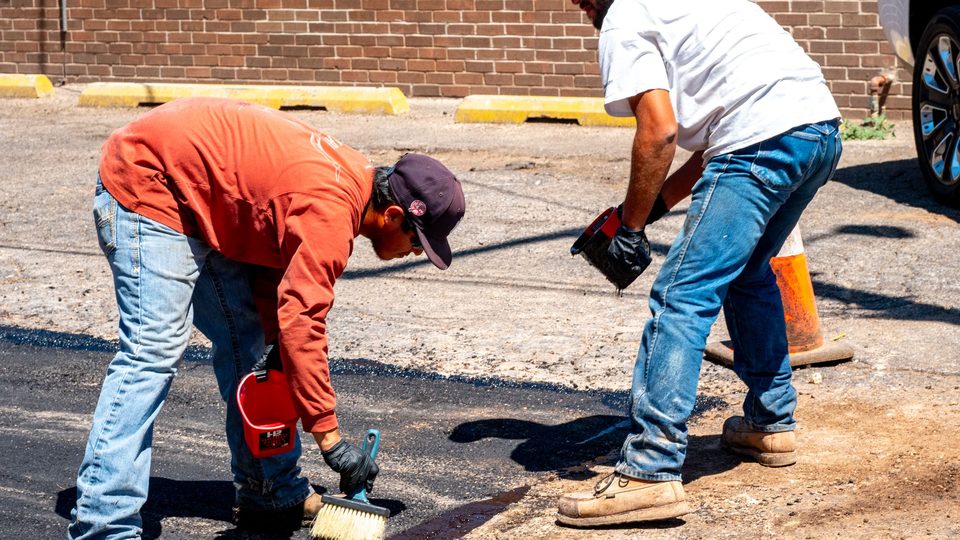
Almost every expensive asphalt job in this county started as a cheap one that was left alone. A crack takes water into the base. The base softens. The surface loses support and starts to break up around the softened area. What began as a few hundred dollars of crack filling becomes a section that needs cutting out and rebuilding, and eventually a driveway that needs replacing.
Repair is the point in that sequence where the cost is still small. It is unglamorous work and it is the highest-return work in the trade, particularly in a climate delivering roughly sixty inches of rain a year into whatever openings the surface offers.
Cracks and the Quarter-Inch Rule
The working threshold is about a quarter of an inch. Below that, a crack is a surface blemish and sealcoat handles it as part of normal maintenance. At or above it, the split has become a pipe feeding rainwater down through the surface to the material below, and closing it is a job in its own right.
The pattern tells you more than the width does. Single cracks running roughly in one direction are usually surface-level -- thermal movement, shrinkage, or a joint that has opened -- and filling them is straightforward and effective. A mesh of linked, closed shapes spread across a patch is a different animal entirely: that is what a surface does once the ground beneath has stopped carrying it, and sealing those lines treats a symptom while the cause keeps working.
There is one genuine local advantage worth naming. Without a freeze-thaw cycle, a crack in Miami does not get levered wider by ice every winter the way it would further north. A small crack here stays a small crack for longer, which means the window to catch it cheaply is wider than it would be in a cold-weather market. That is an argument for doing it, not for putting it off.
Potholes Are Base Problems Wearing a Surface Disguise
A pothole is what happens after water has already been getting underneath for a while. The base beneath a section softens or washes out, the asphalt above it is left bridging a void, traffic breaks through, and the edges then unravel outward from the hole.
This is why a pothole filled with cold patch reappears. Dropping material into the hole restores the surface without touching the softened base that created it, so the new material is bridging the same void and fails the same way, usually faster because the surrounding asphalt has already been disturbed.
A repair that lasts cuts the failed area back to sound asphalt in a clean square, removes the compromised base material, rebuilds and compacts the base, and then places and compacts new asphalt in the opening. It costs more than a bucket of cold patch and it is the difference between a repair and a delay.
Surface Patch or Full-Depth Patch
Two kinds of patch solve two different problems and using the wrong one is the most common failure in repair work.
A surface patch addresses damage in the asphalt where the base underneath is intact -- a scuffed or scarred area, a shallow depression, a section of raveling. The damaged surface is removed or cleaned back and new asphalt is placed and compacted over the sound base.
A full-depth patch addresses damage where the base has failed. Everything comes out down to sound material, the base is rebuilt and compacted, and the opening is filled in compacted lifts of asphalt. It is more work and more cost, and on a failed base it is the only version that holds.
Deciding between them requires looking under the surface rather than at it. A contractor who quotes a patch from a photograph has guessed, and the guess is usually the cheaper one.
Edges, Depressions and Standing Water
Edge failure is specific and it is worth knowing how to read. Asphalt edges that have crumbled away rather than cracked cleanly usually mean the surface was never properly confined at the sides, or that the base was not built out far enough underneath the edge to support it. Edge damage spreads inward, so it is worth addressing while it is still at the perimeter.
Depressions that hold water after rain are the most useful diagnostic a homeowner has, and they cost nothing to find -- walk the surface an hour after a storm and look at where water is still sitting. Each of those low spots is either a settlement in the base or a grading problem that has been there since the surface was laid, and each is where the next failure will start.
Standing water is not a cosmetic complaint in South Florida. Water sitting on asphalt works into it, softens the binder, and accelerates every small defect it can reach. A low spot left alone in this rainfall becomes a soft spot, and a soft spot becomes a hole.
When Repair Is the Wrong Answer
Repair is correct when the surface is broadly sound and the problems are localised -- a few cracks, a pothole, one soft area, a crumbling edge. On a driveway that is otherwise healthy that is a few hundred dollars protecting a few thousand and it is the best money in this trade.
Past a certain point, though, patching becomes a way of spending money slowly on a surface that has already failed. When the interconnected cracking covers a large share of the area, when multiple sections flex underfoot, or when the number of patches on a driveway is starting to exceed the amount of original surface between them, resurfacing or full-depth replacement is the cheaper answer measured over any reasonable timeframe.
The useful question to put to a contractor is not whether something can be repaired. Almost anything can be. It is whether repairing it is what they would do on their own property, and why.
Once the repairs are done and the surface is sound again, sealcoating is what keeps it that way.
What’s Included
- Crack filling on anything at or above roughly a quarter inch, cleaned out before filling
- Pothole repair cut back to sound asphalt with the failed base material removed
- Surface patches where the base is intact, full-depth patches where it is not
- Base rebuilt and compacted inside the opening before new asphalt is placed
- Edge repair where the surface has crumbled rather than cracked
- A straight read on whether repair or resurfacing is the better value on your surface
Why It Matters in Miami
Repair economics are different in Miami-Dade than in a cold-weather market, and they cut both ways. Without freeze-thaw there is no winter mechanism levering cracks open, so a small defect here stays small for longer and the window to catch it cheaply is genuinely wider. Against that, roughly sixty inches of rain a year arriving in violent afternoon bursts means every opening in a surface is tested hard and often, and a water table close to the surface across much of the county means the base under a compromised area has less margin to begin with. The result is that defects here progress slowly and then quickly -- slowly while they are surface-level, quickly once water reaches the base.
Asphalt Repair in Miami — FAQ
When does a crack need filling?
Once it reaches roughly a quarter inch. Narrower than that and it is cosmetic, handled by the next sealcoat as routine upkeep. At that width or wider it has become a pipe delivering rainwater down to the material below, which in this climate makes it a structural matter rather than an appearance one.
Why does my pothole keep coming back?
Because a pothole is a base problem, not a surface problem. Material dropped into the hole restores the look while the softened base that caused it is still there, so the patch is bridging the same void and fails again. A repair that lasts removes the compromised base, rebuilds and compacts it, then places new asphalt.
Can you repair just one section of a driveway?
Yes, and it is usually the right call when the rest of the surface is sound. A full-depth patch cut back to solid asphalt with the base rebuilt underneath is a permanent repair. It will be visible as a patch -- colour and texture differ from aged asphalt around it -- but it holds.
At what point should I stop patching and resurface?
When interconnected cracking covers a large share of the surface, when several areas flex underfoot, or when the patches are starting to outnumber the original surface between them. Past that point patching is spending money slowly on something that has already failed.
What causes the edges of my driveway to crumble?
Usually that the edge was never properly confined, or that the base was not built out far enough underneath to support it. Edge failure spreads inward rather than staying at the perimeter, so it is worth dealing with early.
Water pools on my driveway after rain -- is that a repair job?
It is at least a warning. A depression that holds water is either settlement in the base or a grading problem that has been there since the surface was laid, and standing water accelerates every defect it touches. Whether the fix is a patch or regrading depends on what is underneath, which needs looking at rather than guessing.
Other Services
Areas We Serve
- Asphalt Repair in Miami-Dade County
- Asphalt Repair in Hialeah
- Asphalt Repair in Kendall
- Asphalt Repair in Doral
- Asphalt Repair in Homestead
- Asphalt Repair in Palmetto Bay
Wondering what the job runs? See what an asphalt driveway costs in Miami.
Free Asphalt Repair Estimate in Miami
Free, no-obligation estimates across Miami-Dade County. Tell us about your driveway or lot.
Call (786) 755-3653