Parking Lot Paving in Miami, FL
Commercial lots, apartment and condominium drives, and HOA roadways across Miami-Dade -- heavier sections, site-wide drainage, and striping, phased so the property keeps working.
Call (786) 755-3653 for a Free Estimate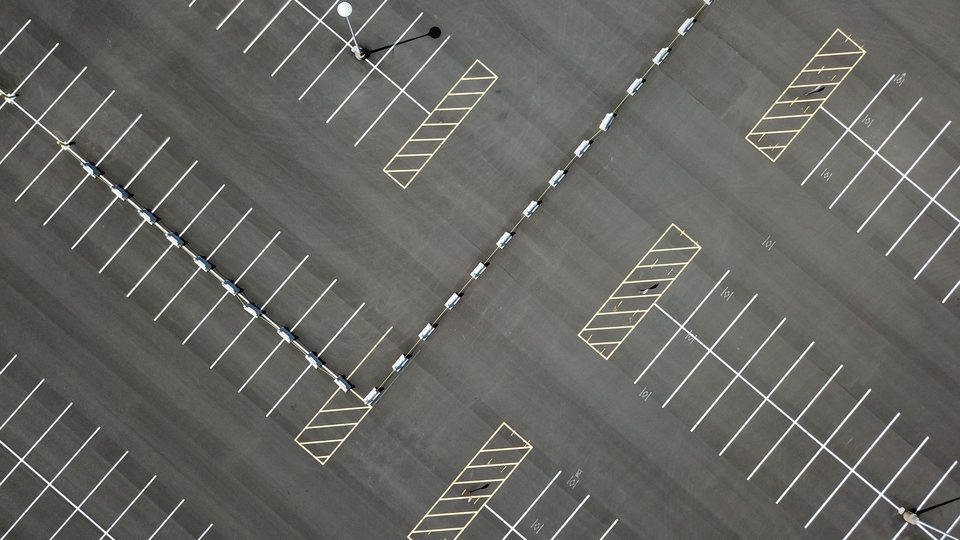
A parking lot is the same trade as a driveway with the stakes moved. The loads are heavier and repeated, the drainage problem covers a whole site rather than one surface, the layout has legal requirements attached to it, and a lot that is out of service is a property that is not fully earning. All four of those change how the work gets planned rather than how it gets built.
The work covers commercial lots, apartment and condominium parking and access drives, HOA roadways, and the service and loading areas around a building. New construction, resurfacing over sound base, full-depth reconstruction, and maintenance programmes on existing surfaces are all part of it.
Lots Are Built for Load, Not for Looks
The structural difference between a driveway and a lot is what uses them. A residential drive carries a few passenger vehicles making the same movements each day. A lot carries constant turning traffic, and usually some proportion of heavy vehicles -- delivery trucks, refuse collection, and moving vans on residential properties -- that concentrate far more load onto the surface than anything a driveway sees.
That shows up in the build as thicker sections and deeper base, and it shows up unevenly across the site. Drive aisles, entrances and the approach to a refuse enclosure take dramatically more punishment than the parking bays themselves, and a lot built to a single specification throughout will fail in those areas first while the bays are still sound. Designing for that unevenness at the start is cheaper than repairing it repeatedly afterwards.
Turning movement matters as much as weight. Asphalt is at its most vulnerable to a wheel turning while a vehicle is stationary, and a Miami surface that has softened in afternoon heat is more vulnerable still. Entrances, corners and any spot where vehicles routinely pivot are where a lot shows its age first.
Drainage Across a Whole Site
On a driveway, drainage means getting water off a surface and away from a building. On a lot it means managing everything that falls on a large impervious area during a storm that can deliver an inch in under an hour, and doing it on ground that is often flat and that sits above a water table close to the surface.
That is a design problem rather than a grading detail. It involves where the low points are put, where inlets and drains sit, how the surface falls toward them, and what happens to the volume once it is collected. A lot with drainage that is merely adequate performs perfectly for most of the year and then floods in a way that closes the property for an afternoon.
Resurfacing an existing lot is the one practical opportunity to correct drainage that has never worked, because the levels are being reset anyway. Low spots that have been holding water for years can be brought up, and falls can be corrected toward existing inlets. That opportunity closes again the moment the new surface is compacted, which is why it is worth raising before the work is scheduled rather than after.
Striping, Layout and Access
Striping happens last and it is not an afterthought. The layout decides how many spaces the lot holds, how traffic circulates through it, where pedestrians cross, and whether accessible spaces and fire lanes sit where they are required to sit. A poorly laid out lot loses capacity and creates conflict points that generate incidents.
A resurfacing is the moment a bad layout can become a better one at almost no additional cost, because the markings are going down fresh regardless. It is worth asking for the layout to be reviewed against how the site is actually used rather than simply copied back onto the new surface -- traffic patterns on a property often change substantially over the life of a lot, while the paint keeps describing the original plan.
Accessible parking has specific requirements for the number of spaces, their dimensions, the access aisles beside them, and the route from those spaces to the entrance. These are requirements rather than preferences, and they are checked. They should be confirmed as part of the layout discussion at the start of a project, not discovered at the end of one.
Phasing So the Property Keeps Operating
The practical difference between commercial and residential work is scheduling, and it is usually the part of a proposal worth the most scrutiny. A lot that is closed is a property that is not fully functioning, and for a retail site, a medical office or a condominium with no alternative parking, that cost can exceed the cost of the paving.
Most lots can be phased. Half the site at a time, section by section, or overnight where the property and its neighbours allow it. Phasing costs something -- more mobilisations, more edge joints between sections, and a longer overall calendar -- and it is frequently worth every bit of that.
Phasing has to be planned before a job is priced, because it changes the sequence and the equipment schedule. Raise it in the first conversation. A contractor who has priced a full closure and is then asked to phase the work is repricing the job, not accommodating a request.
Residential properties have their own version of this. On a condominium or apartment site, residents need to know where to park and when, and the notice period for that is usually longer than the work itself. Communication, not asphalt, is what makes those jobs go smoothly.
Maintaining a Lot Instead of Replacing It
A lot on a maintenance programme costs far less over its life than one that is run until it fails. The components are unremarkable: crack filling on a regular cycle, patching localised failures before they spread, sealcoating on the two to three year cadence this climate calls for, and re-striping as markings fade under year-round sun.
Sun is what fades the markings, and it does it faster here than almost anywhere. Faded striping on a commercial property reads as neglect to every customer who parks on it, and it is the cheapest item on the whole list to put right.
The economic case is simply that surfaces fail from the edges of small defects outward. A crack filled this year is a few dollars. The same crack in four years is a soft area, in seven it is a full-depth patch, and in ten it is a section of the lot. Nothing about that sequence is unusual -- it is just slow enough that it is easy to defer, and expensive enough that deferring it is the single most costly habit in commercial property maintenance.
Lots are the same trade as driveways with heavier loads and more at stake on drainage -- the asphalt paving page covers the base and compaction work that decides both.
What’s Included
- Site assessment covering surface condition, base, traffic patterns and where water currently goes
- Thicker sections and deeper base at entrances, drive aisles and refuse areas
- Drainage designed for the whole site rather than surface by surface
- New construction, resurfacing over sound base, and full-depth reconstruction
- Striping, directional markings, accessible spaces and fire lanes
- Phased scheduling so the property keeps operating during the work
- Ongoing maintenance -- crack filling, patching, sealcoating and re-striping
Why It Matters in Miami
Commercial paving in Miami-Dade is shaped by two local realities. The first is water: a lot is a large impervious surface on generally flat ground above a water table that sits close to the surface, taking storms that deliver an inch in under an hour, so site drainage is an engineering problem rather than a grading detail. The second is that this county does not have a slow season. Retail, medical, hospitality and multi-family properties here operate year-round, which means there is no natural window when a lot can simply be closed, and phasing is the normal case rather than the exception. Both push the same direction -- plan the drainage and the sequence before anyone prices the asphalt.
Parking Lot Paving in Miami — FAQ
Can the lot stay open while you work?
Usually, yes. Most lots can be phased -- half the site at a time, section by section, or overnight where the property allows it. Phasing adds mobilisations and edge joints and lengthens the overall calendar, and on a property with no alternative parking it is almost always worth that. Raise it in the first conversation, because it changes how the job is priced and sequenced.
How is a parking lot different from a driveway?
Same trade, heavier engineering. Lots carry constant turning traffic and some proportion of heavy vehicles, which means thicker sections and deeper base -- and not uniformly, since entrances, drive aisles and refuse areas take far more punishment than the bays. Drainage is designed for a whole site, and the job ends with striping.
Can we fix drainage problems during a resurfacing?
That is the best time to do it. The levels are being reset anyway, so low spots that have held water for years can be brought up and falls corrected toward existing inlets at modest additional cost. Once the new surface is compacted that opportunity is closed until the next resurfacing.
Do you handle striping and accessible parking layout?
Yes, and a resurfacing is the moment to review the layout rather than copy it back. Accessible spaces have specific requirements for count, dimensions, access aisles and the route to the entrance -- those get confirmed at the start of a project rather than discovered at the end of one.
How often should a commercial lot be sealcoated?
On the same two-to-three-year rotation as a residential drive. The driver is twelve months of ultraviolet load rather than any winter effect. Markings normally get refreshed in the same visit, since the sun that ages the surface is also what fades the paint.
Do you work on condominium and HOA properties?
Yes -- condominium and apartment parking, access drives and HOA roadways are a large share of this work in Miami-Dade. Those jobs are as much about notice and communication as about paving: residents need to know where to park and when, and that lead time is usually longer than the work itself.
Other Services
Areas We Serve
- Parking Lot Paving in Miami-Dade County
- Parking Lot Paving in Hialeah
- Parking Lot Paving in Kendall
- Parking Lot Paving in Doral
- Parking Lot Paving in Homestead
- Parking Lot Paving in Palmetto Bay
Wondering what the job runs? See what an asphalt driveway costs in Miami.
Free Parking Lot Paving Estimate in Miami
Free, no-obligation estimates across Miami-Dade County. Tell us about your driveway or lot.
Call (786) 755-3653