Asphalt Sealcoating in Miami, FL
A protective coat over sound asphalt, applied on a two to three year cycle -- the maintenance that directly addresses what actually ages a surface in South Florida.
Call (786) 755-3653 for a Free Estimate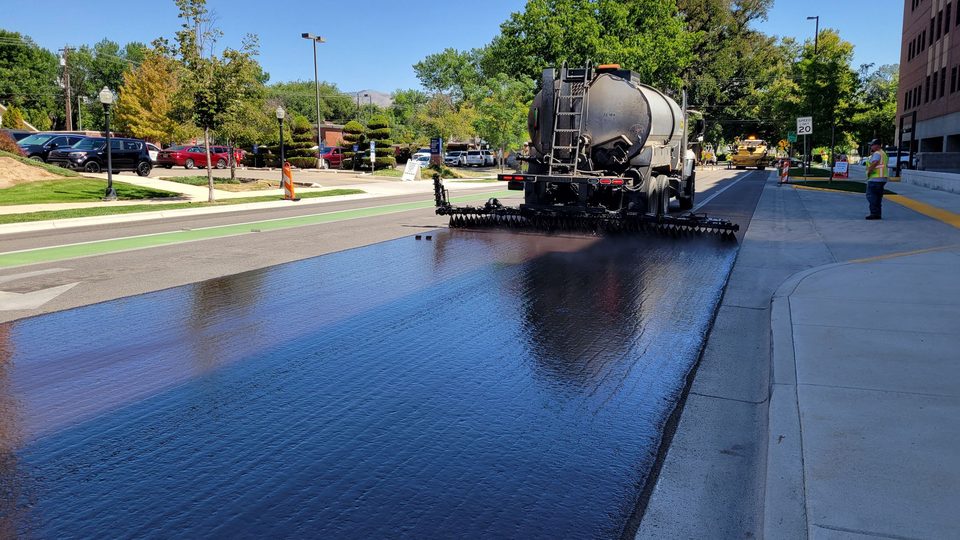
Sealcoating is a thin protective layer applied over asphalt that is still structurally sound. It is not a repair, it is not a resurfacing, and it does not add strength. What it does is put a sacrificial barrier between your surface and the two things that age it here: ultraviolet light and water.
That distinction matters more in Miami than in most places, because the case for sealcoating elsewhere often leans on frost and de-icing salt, neither of which exists here. The South Florida argument is simpler and it is year-round. The sun works on a black surface every day the sky is clear, and roughly sixty inches of rain a year looks for any route into it.
What Sealcoat Does, and What It Cannot Do
Asphalt is aggregate held together by a binder. Ultraviolet light oxidises that binder, drying it out and making it brittle. The visible sequence is familiar to anyone with an older driveway: black fades to grey, the texture roughens, and eventually loose stone comes away when you brush it. That is the binder failing, and it is a surface-level process rather than a structural one.
Sealcoat slows that process by covering the binder, and it seals the surface tight enough that rain runs off rather than soaking in. A sealed driveway also sheds oil and fuel drips more readily, which matters because petroleum products dissolve asphalt binder directly.
What sealcoat cannot do is hold up a failing base or close a crack. Sealer is a coating measured in fractions of an inch. Applied over a crack it bridges nothing and will split again within weeks, and applied over a soft or moving surface it produces a driveway that looks fixed and is not. Anyone selling sealcoating as the remedy for cracking or sinking is selling you a year of appearance.
The Miami Cadence -- Every Two to Three Years
The published cadence for this climate is a sealcoat every two to three years. That is shorter than the interval you will see quoted in national guidance, and the reason is exposure: a surface here takes direct ultraviolet load twelve months a year rather than through a single summer.
Properties close to the water sit at the short end of that range. Salt air accelerates the breakdown of the surface and of anything metal around it, so a coastal driveway generally wants attention sooner than an inland one of the same age.
A new driveway is the exception and it should wait. Fresh asphalt needs months to cure before it is sealed, because sealing it early traps what is still working its way out of the surface. Sealing a driveway the week after it is laid is not diligence -- it is a mistake, and a contractor who offers it has told you something about how they work.
Over-sealing is also a real thing. Coats applied too frequently build up thickness, and thick accumulated sealer cracks in its own right, in a fine pattern unrelated to the asphalt beneath it. Two to three years is the interval for a reason and more often is not better.
Crack Filling Comes First
On any driveway with cracking, the sequence is crack filling and then sealcoating -- never sealcoating alone. A crack wider than about a quarter of an inch is an open channel taking water straight past the surface and into the base, and in this rainfall that is a structural issue rather than a cosmetic one.
Filled first and then sealed, a modestly cracked driveway is genuinely protected and the repair is largely invisible under the new coat. Sealed without filling, the crack is still there, still taking water, and now hidden under a uniform black finish that makes it harder to see how the surface is actually doing.
This is the most common corner cut in the maintenance end of this trade, because sealer is fast and crack filling is fiddly. It is worth asking directly whether cracks are being filled as part of the work, and worth reading the answer carefully.
When a Surface Is Past Sealing
Sealcoat is the right call on a driveway that is worn but sound. There is a point past which it is money spent on appearance, and recognising it saves a homeowner from paying twice.
The signs are the same base-failure tells that apply everywhere in this trade. Cracking that has joined into interconnected shapes across an area. Sections that flex or give underfoot. Edges crumbled rather than cracked. Depressions holding water after rain. Loose aggregate coming away in quantity across the whole surface rather than in patches.
A driveway showing those is asking for resurfacing or replacement, and sealing it first is a wasted application because the surface underneath will keep moving. The honest version of this conversation sometimes ends with a contractor declining to sell you sealcoating, and that is the contractor worth calling back.
What the Job Looks Like
The surface is cleaned first -- swept, blown, and washed where there is ingrained dirt, because sealer bonds to asphalt and not to the dirt sitting on it. Oil and fuel stains get treated separately with a primer, since sealer will not adhere over petroleum residue.
Cracks are filled and given time to set. Edges, expansion joints and the transitions where the driveway meets concrete or landscaping get cut in by hand. The sealer itself is then applied across the surface, usually in two coats on a driveway that has not been sealed in some time.
The surface has to stay clear while it cures. Foot traffic is generally fine within a day, and vehicles are typically back on within 24 to 48 hours depending on heat and humidity -- both of which this climate supplies in quantity, and both of which affect the cure. Driving on sealer before it has set marks it permanently, so the wait is not a formality.
Sealcoat goes over sound asphalt. If the surface is cracked or broken up, repair comes first -- sealer applied over an open crack does nothing for it.
What’s Included
- Full surface clean -- sweeping, blowing and washing where the surface needs it
- Primer treatment on oil and fuel stains so the sealer bonds
- Crack filling on anything wider than roughly a quarter inch, before sealer goes down
- Hand-cut edges, joints and transitions to concrete or landscaping
- Sealer applied across the surface, two coats where the surface calls for it
- A straight answer when a surface is past sealing and needs resurfacing instead
Why It Matters in Miami
The sealcoating case in Miami is made by the sun rather than by winter. Ultraviolet exposure here is year-round and relentless, oxidising the binder that holds an asphalt surface together every day the sky is clear, and the roughly sixty inches of rain that follow arrive in bursts heavy enough to exploit any porosity that oxidation has created. Properties near the water carry salt air on top of that. The published two to three year cycle for this climate reflects all of it, and it is meaningfully shorter than what national guidance suggests for cooler, less exposed markets.
Sealcoating in Miami — FAQ
How often should a driveway be sealcoated in Miami?
Every two to three years is the published cadence for this climate. That is shorter than national guidance because ultraviolet exposure here runs year-round rather than through a single summer. Properties near the coast sit at the short end of the range because salt air accelerates surface breakdown.
Will sealcoating fix my cracks?
No. Sealer is a thin coating and it bridges nothing. Cracks have to be filled first, and then the surface is sealed over the repair. Sealer applied over an open crack splits again within weeks and hides the problem in the meantime.
How soon can I seal a brand new driveway?
Not for months. New asphalt needs time to cure, and sealing it early traps what is still working its way out of the surface. A contractor offering to seal a driveway immediately after laying it is making a mistake rather than adding value.
How long before I can drive on it?
Foot traffic is generally fine within about a day, and vehicles are typically back on within 24 to 48 hours depending on heat and humidity. Driving on sealer before it has cured marks it permanently, so it is worth respecting the wait.
Can a driveway be sealed too often?
Yes. Coats applied too frequently build up thickness, and accumulated sealer cracks in its own right in a fine pattern that has nothing to do with the asphalt underneath. Two to three years is the interval; more often is not better and eventually causes its own problem.
How do I know if my driveway is too far gone to seal?
Interconnected cracking across an area, sections that flex underfoot, crumbled edges, depressions that hold water, or loose stone coming away across the whole surface. Any of those means the base is failing, and sealing over it is money spent on appearance while the surface underneath keeps moving.
Other Services
Areas We Serve
- Sealcoating in Miami-Dade County
- Sealcoating in Hialeah
- Sealcoating in Kendall
- Sealcoating in Doral
- Sealcoating in Homestead
- Sealcoating in Palmetto Bay
Wondering what the job runs? See what an asphalt driveway costs in Miami.
Free Sealcoating Estimate in Miami
Free, no-obligation estimates across Miami-Dade County. Tell us about your driveway or lot.
Call (786) 755-3653